
Faces Shaped By Adoration
The People Who Walked in Darkness Have Seen a Great Light

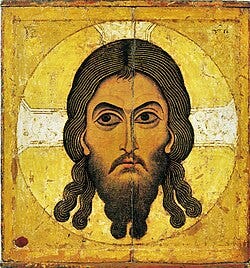
Wiping my face with his wet hands, he cleansed and restored it from the grime and filth of Hell.
Dante, Purgatorio (Canto 1)
There’s a tremendous warmth and generosity of spirit to the life and work of the Orthodox theologian, Olivier Clément (1921-2009). One of his major themes, for instance, is what he calls the ‘Theology of the Face’, because the human face, for Clément, is far more than an anatomical configuration. It’s a site of the sacred, a locus of revelation, and an icon of the Lord, who has Himself a human face, of course.
‘The final proof of God’s existence,’ Clément writes in Le visage intérieur (1978), ‘consists of the radiance of certain faces.’ The face is ‘a reality that cannot be decomposed, classified or quantified because it always points beyond … In the impregnable prison of the world, the face creates a breach … It constitutes an opening up to transcendence.’
To have one of these ‘certain faces’ is, in my view, to have fully responded to our calling as sons and daughters of God. This face is who we truly are, but in the flatlands of modernity, where contact and rapport with the Divine has been made exceptionally hard, that isn’t what we always see or what we present to those around us. ‘If that encounter is lost,’ says Clément, ‘if that movement of going beyond oneself can no longer take place, then the face loses its centre of spiritual gravity and its openness to that other world in which it finds its innate order. Then entropy takes hold of it … It no longer possesses the peace and depth of inner silence in which the wounds of individual and collective events may be healed in the light … The waves and fashions of current affairs take it over.’
This is the opposite of where we want to be in life, and again, it isn’t who we really are. But this is where the conditions of modernity - fragmentation, materialism, manic speed - can drive us. In a worst case scenario, it can drag us down to the pit of Hell, as in the case of Weston, the demented scientist who Ransom wrestles to the death with in C.S. Lewis’s Perelandra:
The face which Weston raised from torturing the frog had that terrible power which the face of a corpse sometimes has of simply rebuffing every conceivable human attitude one can adopt towards it … The smile was not bitter, nor raging, nor, in an ordinary sense, sinister; it was not even mocking. It seemed to welcome Ransom, with a horrible naïveté of welcome, into the world of its own pleasures, as if they were the most natural thing in the world ... It was not furtive, nor ashamed, it had nothing of the conspirator in it. It did not defy goodness, it ignored it to the point of annihilation.
Our lives don’t have to turn out this way though. Even today. Even in this desacralised, short-sighted, horizontal world. There isn’t only a way down - there’s a path through, out, and up as well. Ransom, in his battle with evil on Venus, blazes the trail. He sticks to his mission, stays close to Maleldil (Christ), dispatches the Un-Man (as Weston has become), and lives to see a pair of gods - Mars and Venus - face to face:
The faces surprised him very much. Nothing less like the ‘angel’ of popular art could well be imagined … One single changeless expression - so clear that it hurt and dazzled him - was stamped on each and there was nothing else there at all … Pure, spiritual, intellectual love shot from their faces like barbed lightning. It was so unlike the love we experience that its expression could easily be mistaken for ferocity.
Having looked upon such numinous visages, Ransom, upon his return to Earth, is himself transfigured, not just in his face but in his whole body and being:
I was silent a moment, astonished at the form which had risen from the casket - almost a new Ransom, glowing with health and rounded with muscle and seemingly ten years younger. In the old days he had been beginning to show a few grey hairs; but now the beard which swept his chest was pure gold.
One of the more striking passages in Le visage intérieur is when Clément discusses the virtues of ‘slow and serious cultures, where a man learns to be silent and welcome the earth and sky.’ He talks about priests and monks, their faces ‘shaped by adoration and the dense, compact nature of the Latin liturgy, which modelled the stripped face of the Benedictine, a face carved in the stone of faith. Also the flowing Byzantine liturgy … which gives us the translucent face of the Athonite monk in the streaming of his beard and hair.’
Clearly, we don’t live in a world that encourages us to inhabit and internalise these deep, restorative rhythms. But we shouldn’t let that discourage us. That would be despair. That would be the sin against the Holy Ghost. Olivier Clément and C.S. Lewis are two of the least despairing writers of our age. We are where we are and it’s all part of the challenge, and if we do what we can, when we can, however we can, and trust in God’s goodness, then momentum will build of its own accord.
Orientation and attention are the key words here. If we’re orientated the right way - facing the Sun, facing the Light, facing Christ - then this, in time (or even instantly if Heaven decrees), will surely become reflected and embodied in our faces. Then there’s attention - focused concentration on what’s good, beautiful, and true. That could be a book, or a person, or the Mass. Whatever it is, it’s the focus that counts. When our attention’s scattered, our energies become dissipated and our faces take on that ‘vaguely chaotic’ look that characterises Wither, the éminence grise of the NICE, in That Hideous Strength. Focus, on the contrary, gives us something of that ‘stripped’ Benedictine look - ‘a faith carved in stone’ - the opposite of Wither’s diffuse vacuity and 100% where we want to be in life.
The people who need this faith, those who need to see an example of this faith - and they are many, and will be more in times to come - will then perceive it in our faces - that radiance, that transcendence, that breach in the prison walls - ‘a light to lighten the gentiles’ and a beacon of hope to those trapped in the blind alleys of liquid modernity. They’ll see it in our faces. Yes. They’ll hear it in our speech and discern it in our gestures too. As Professor Kirke in The Lion, The Witch, and The Wardrobe, advises Peter, Susan, Edmund, and Lucy on their return from Narnia:
‘And don’t mention it to anyone else unless you find that they’ve had adventures of the same sort themselves. What’s that? How will you know? Oh, you’ll know all right. Odd things they say - even their looks - will let the secret out. Keep your eyes open!’
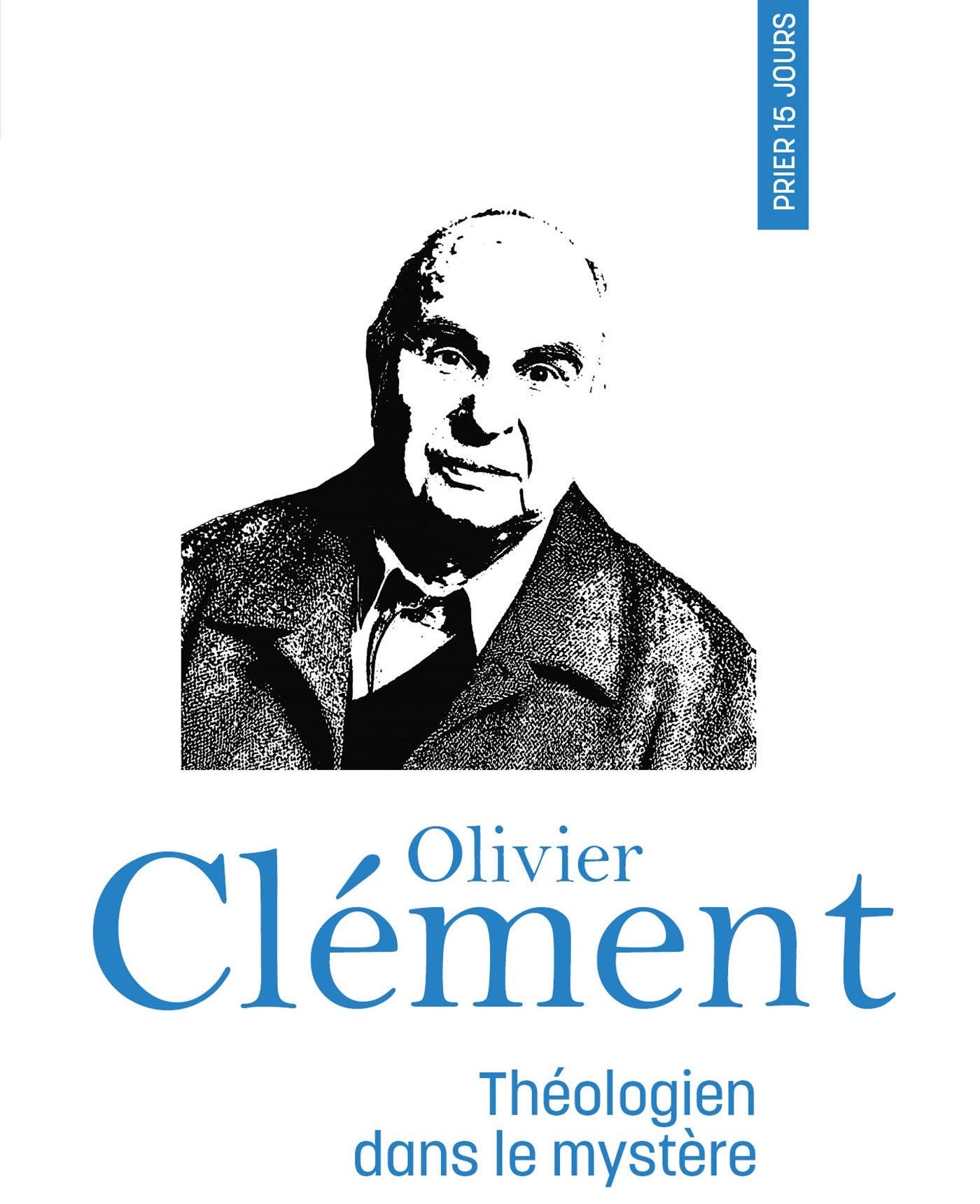
I’m indebted in this piece to the work of Loup des Abeilles and his Substack, Chanson des Etoiles. You’ll find a host of good things there, including fine translations of Clément and Paul Evdokimov. I’ve based my script from Le visage intérieur on Loup’s work and you can read his outstanding version here.