
Susan's New Start
The Great Story Begins

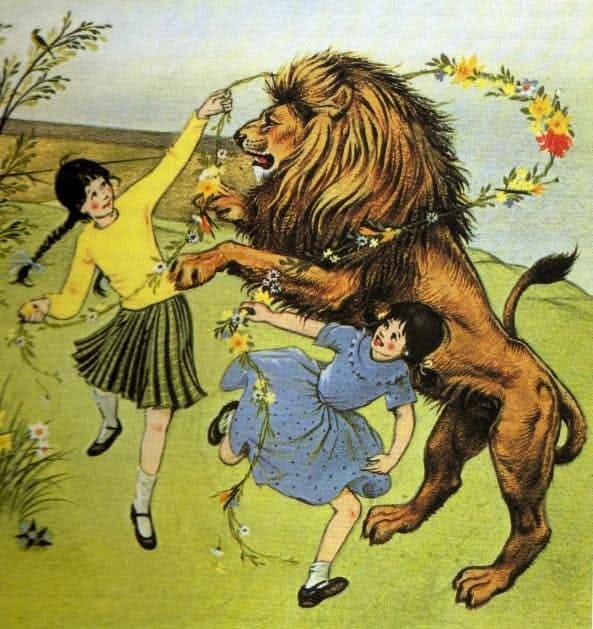
One of the most challenging and perplexing episodes in the whole of the Narnia series is Susan’s exclusion from Heaven in The Last Battle. This is what’s said about her by the ‘Friends of Narnia’ when Tirian enquires as to her absence:
‘My sister Susan,’ answered Peter shortly and gravely, ‘is no longer a friend of Narnia.’
‘Yes,’ said Eustace, ‘and whenever you’ve tried to get her to come and talk about Narnia or do anything about Narnia, she says, “What wonderful memories you have! Fancy you still thinking about all those funny games we used to play when we were children.”’
‘Oh, Susan!’ said Jill, ‘she’s interested in nothing nowadays except nylons and lipstick and invitations. She always was a jolly sight too keen on being grown up.’
‘Grown up indeed,’ said the Lady Polly. ‘I wish she would grow up. She wasted all her school time wanting to be the age she is now, and she’ll waste all the rest of her life trying to stay that age. Her whole idea is to race on to the silliest time of one’s life as quick as she can and then stay there as long as she can.’
This seems so petty, harsh, and mean - vindictive even. You’d expect better from the self-styled ‘Friends of Narnia.’ It’s disappointing to see them taking pot shots at a Narnian legend who danced with Aslan on the morning of His Resurrection and who, whether they like it or not, will forever be one of their number. ‘Once a King or Queen in Narnia’ as Aslan Himself says, ‘always a King or Queen in Narnia.’ We might also recall the words of Christ, ‘Let he who is without sin cast the first stone.’ Maybe this is why Edmund, who famously betrayed the cause in The Lion, The Witch, And The Wardrobe, stays silent throughout this exchange.
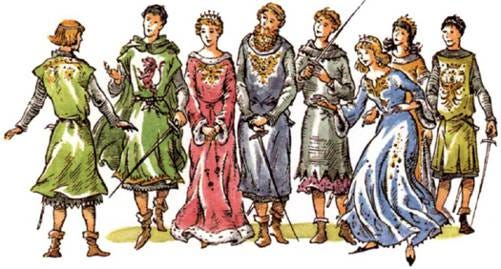
That all said, I think the deeper point Lewis is trying to make here is that Susan has somehow lost sight of what’s essential and has become seduced by the second and third order goods of this deceptive, passing world. The Orthodox theologian, Paul Evdokimov (1901-1970), describes it neatly in Ages of the Spiritual Life (1964): ‘The perverted will turns away from the original direction of the heart in order to seek the absolute in idols.’
This is what happens to Susan. It’s the opposite of a Platonic anamnesis, where we remember who we are as children of God and the Deep Heaven from which we came. This is a fall and a forgetting, a sinking into Maya and illusion, a flight from Being and a descent into the senseless, ceaseless whirlwind of becoming.
It’s important to keep a balanced approach, however. There’s been a tendency, I feel, to assume that Susan has been damned forever just because she fails to ‘make the cut’ at this particular time. We forget how young she is. She can’t be much more than twenty. Life lies before her still.
It sounds an appalling thing to say, but it could well be that the sudden deaths of her parents and siblings plus Digory, Polly, Eustace, and Jill might be the best thing spiritually to happen to her. We have the sense that up until now life has pretty much been a breeze for Susan. Popularity and success come easily and naturally. She has her faults, as do we all - a touch vain, slightly over-cautious and slow to believe - but she comes across in the books as a likeable, caring, dependable person. We know as well from The Horse and His Boy and Lucy’s bout of jealousy in The Voyage of the Dawn Treader how beautiful she is and how princes and kings fall over themselves to win her favour. You can trust that this would play out in exactly the same way in our world as it does in Narnia.
Susan hasn't had any crosses to bear so far. Nothing to shock her awake and make her remember. It’s been easy to forget. All too easy. Until now. But maybe this is how it has to be. As Evdokimov also observes, ‘There are places in our hearts which do not yet exist, and it is necessary for suffering to penetrate these in order that they may come into being.’
It’ll be a rough ride, to say the least. Susan will be traumatised beyond measure. But there is a way out from the shock and horror of these multiple bereavements, and that’s to face the truth of what she’s denied and to confess and acknowledge her ‘original sin’ of forgetting. She can then be forgiven and redeemed and given new life in her turn as Edmund was before her. After this, it’s all about repentance and humility, the twin bases from which she’ll one day be able to move forward. Evdokimov puts it well again: ‘Only their power can heal ego-centric idolatry, self-love, pretensions, or inferiority complexes … In humility lives the Communion of Sinners, the other aspect inseparable from the Communion of Saints.’
Susan will also need a good spiritual director. If she’s Anglican (for some reason I’ve always assumed the Pevensies to be Anglican) then the likes of Martin Thornton (1915-1986), Austin Farrer (1904-1968), or the Cowley Fathers, who were active in Oxford at the time, would fit the bill nicely. I don’t believe that any of these wise and cultured men would doubt the veracity of Narnia. The same for Rowan Williams if this was taking place today.
With proper penitence and guidance, Susan could go very far indeed. Her pain - held and nurtured in a Christ-centred frame - would most likely deepen and transform her personality in rich and unsuspected ways. I can see her as a religious philosopher à la Simone Weil (1909-1943), or as a nun who gives her life for others like Mother Maria of Paris (1891-1945), or as a silent, prayerful contemplative, keeping the world turning through what the Orthodox call the ‘joyful sorrow’ of deep contrition and supplication. I can even imagine her as a writer of fantasy fiction as Lewis himself was. But whatever she’d do, she’d be bringing the light and glory of Narnia to the disenchanted, spiritually dishevelled milieu of the twentieth-century West. No small thing indeed.
And after all, why not? We’re told at the end of the book, which is also the end of the entire Narnian corpus, that everything we’ve read so far is only a prologue - or not even that - and that the real story is only now about to start:
But for them it was only the beginning of the real story. All their life in this world and all their adventures in Narnia had only been the cover and the title page: now at last they were beginning Chapter One of the Great Story which no-one on earth has read: which goes on forever: in which each chapter is better than the one before.
On that note, some people (David Bentley Hart, for instance) find it hard to worship a God who permits eternal punishment in Hell. Maybe because I encountered this book so early in life, this isn’t something that’s overly concerned me, and I doubt it ever will even if I end up down below myself. Elsewhere in the story we see how obstinate, cynical, and prideful some folk (dwarves in this case) can be. They end up damning themselves essentially. God doesn’t do anything at all or ‘send’ anyone anywhere.
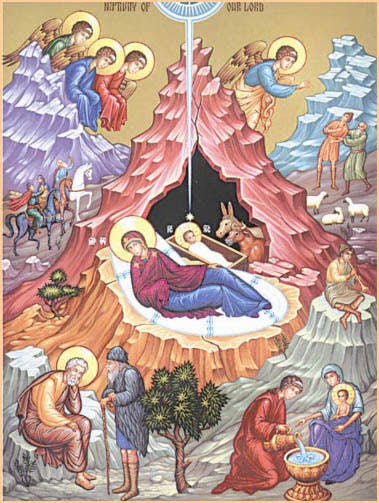
But I do believe in a God who can and does turn evil into good - all the time as well - and a greater good than any of us can presently conceive. Otherwise what hope would there be? For Susan or for any of us? But there is hope. There’s hope because of the Incarnation, Descent Into Hell, and Resurrection of the Lord. He’s done all things, seen all things, and he makes now all things new for us. Evdokimov, as ever, encapsulates it beautifully in these remarks on the Icon of the Nativity:
The swaddling clothes of the infant Jesus have the exact form of the winding cloths that the angel will show to the myrrh-bearing women on the morning of the Resurrection. The luminous Child stands out in sharp contrast to the black background and anticipates the Descent Into Hell. He is himself ‘the light shining in the darkness.’ The sun has set with him, but the flesh of God under the earth dissipates the darkness of Hell. Light battles with darkness; life annihilates death.
This is how I see the new story, the Great Story, beginning - in a draughty church at smokefall, lit by a handful of tall, tapered candlesticks, Susan gazing at this icon, two years after the train crash that killed her family, tears of sorrow, repentance, and a barely discernible yet undeniable and wholly surprising joy streaming down her face.
The Word is born anew. In the cave of her heart.
I very much like this post, John. It seems slightly odd to be discussing a fictional character as though she were real but there are certainly going to be parallels in real life so in that sense Susan is real. Her spiritual state certainly is. Perhaps because of her beauty she had the greatest temptation to go astray but, as you suggest, her suffering will transform and transmute her soul and she will come back to her true role as a Queen of Narnia, all the more beautiful for having suffered.
Marvellous, John! Really, one of your best!